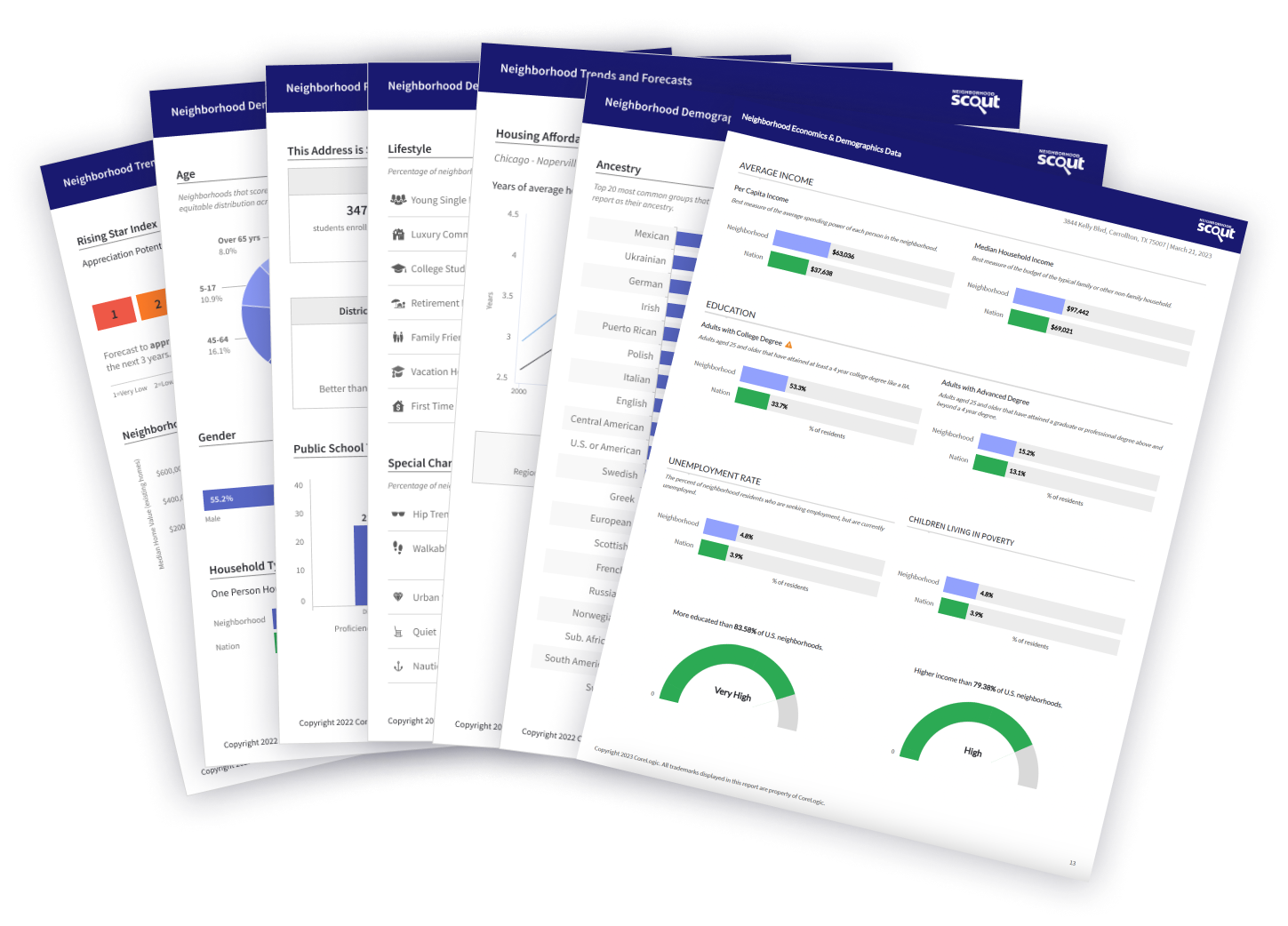
Mantoloking is a tiny coastal borough (i.e. on the ocean, a bay, or inlet) located in the state of New Jersey. With a population of 340 people and just one neighborhood, Mantoloking is the 509th largest community in New Jersey. There's nothing like the smell of a brand new house, and in Mantoloking, you'll find that a large proportion of houses were recently built. New growth in residential real estate is an indication that people are choosing to move to Mantoloking, and putting down their money on brand new construction. Mantoloking’s real estate is, on average, some of the newest in the nation. Mantoloking does seem to be experiencing an influx of affluent people, because the median household income is $250,001.00.
Mantoloking home prices are not only among the most expensive in New Jersey, but Mantoloking real estate also consistently ranks among the most expensive in America.
Mantoloking is a decidedly white-collar borough, with fully 98.05% of the workforce employed in white-collar jobs, well above the national average. Overall, Mantoloking is a borough of managers, professionals, and sales and office workers. There are especially a lot of people living in Mantoloking who work in business and financial occupations (27.32%), management occupations (24.88%), and sales jobs (10.73%).
Of important note, Mantoloking is also a borough of artists. Mantoloking has more artists, designers and people working in media than 90% of the communities in America. This concentration of artists helps shape Mantoloking’s character.
Also of interest is that Mantoloking has more people living here who work in computers and math than 95% of the places in the US.
A relatively large number of people in Mantoloking telecommute to their jobs. Overall, about 44.50% of the workforce works from home. While this may seem like a small number, as a fraction of the total workforce it ranks among the highest in the country. These workers are often telecommuters who work in knowledge-based, white-collar professions. For example, Silicon Valley has large numbers of people who telecommute. Other at-home workers may be self-employed people who operate small businesses out of their homes.
Another notable thing is that Mantoloking is a major vacation destination. Much of the borough’s population is seasonal: many people own second homes and only live there part-time, during the vacation season. The effect on the local economy is that many of the businesses are dependent on tourist dollars, and may operate only during the high season. As the vacation season ends, Mantoloking’s population drops significantly, such that year-round residents will notice that the city is a much quieter place to live.
Because of many things, Mantoloking is a very good place for families to consider. With an enviable combination of good schools, low crime, college-educated neighbors who tend to support education because of their own experiences, and a high rate of home ownership in predominantly single-family properties, Mantoloking really has some of the features that families look for when choosing a good community to raise children. Is Mantoloking perfect? Of course not, and if you like frenetic nightlife, it will be far from your cup of tea. But overall this is a solid community, with many things to recommend it as a family-friendly place to live.
One of the nice things about Mantoloking is that it is nautical, which means that parts of it are somewhat historic and touch the ocean or tidal bodies of water, such as inlets and bays. Because of this, visitors and locals will often go to these areas to take in the scenery or to enjoy waterfront activities.
In Mantoloking, however, the average commute to work is quite long. On average, people spend 37.77 minutes each day getting to work, which is significantly higher than the national average. One bright side is that local public transit is widely used, so it may be an option to avoid the headache of driving in the heavy traffic by leaving the car at home and taking transit.
In Mantoloking, a lot of people use the train to get to work every day though Mantoloking is a relatively small borough. Those that ride the train are primarily traveling out of town to good jobs in other cities.

Do you have a 4-year college degree or graduate degree? If so, you may feel right at home in Mantoloking. 86.36% of adults here have a 4-year degree or graduate degree, whereas the national average for all cities and towns is just 21.84%.
The per capita income in Mantoloking in 2022 was $191,059, which is wealthy relative to New Jersey and the nation. This equates to an annual income of $764,236 for a family of four.
The people who call Mantoloking home describe themselves as belonging to a variety of racial and ethnic groups. The greatest number of Mantoloking residents report their race to be White, followed by Black or African-American. Important ancestries of people in Mantoloking include Italian, Irish, German, English, and European.
The most common language spoken in Mantoloking is English. Other important languages spoken here include Italian and Polish.
When you see a neighborhood for the first time, the most important thing is often the way it looks, like its homes and its setting. Some places look the same, but they only reveal their true character after living in them for a while because they contain a unique mix of occupational or cultural groups. This neighborhood is very unique in some important ways, according to NeighborhoodScout's exclusive exploration and analysis.
is a neighborhood that is on the ocean, a bay, or inlet. Many times, such places have amenities that bring locals and visitors to the waterfront for recreational activities or to check out the scenery. In some densely populated areas that are less financially well-off, the neighborhood waterfront can be relatively industrial and less open to recreation. In addition to being coastal, is a very nautical neighborhood, meaning that it is somewhat historic, walkable, densely populated and on the water. This gives the neighborhood a very nautical feel, with some seaside and shipping feel, which some may really enjoy the sights and sounds of.
In addition, despite all of the residential real estate here in the neighborhood, NeighborhoodScout has discovered that much of it is vacant. In resort or second-home vacation areas, this naturally occurs because homes and apartments are seasonally occupied, and empty for a portion of the year. In non-vacation or resort areas, however, this can be an indicator of property abandonment or a weak real estate market. The vacancy rate here is 58.8%, which is higher than 99.3% of all U.S. neighborhoods.
Furthermore, one way that the neighborhood really stands out, is that it has more large 4, 5, or additional bedroom homes and real estate than 97.6% of the neighborhoods in America. When you walk or drive around this neighborhood, you'll instantly notice the size of the homes here which definitely makes a strong visual statement.
Wealth makes most things in life easier, and a few things harder. If you are wealthy and enjoy keeping up with the Jones', this neighborhood will interest you. In fact, according to NeighborhoodScout's research, the neighborhood is wealthier than 96.9% of the neighborhoods in the United States. Residents here are truly in a unique situation even when compared to other Americans, based on the sheer amount of wealth concentrated here. Even in times of economic downturn, residents of this neighborhood, as a group, suffered less and recovered more quickly. This is indeed a stand-out characteristic of this neighborhood. As one would expect in a considerably wealthy neighborhood such as this, also has one of the lowest ratings of child poverty in the nation.
In addition, if you're a regular supporter of the arts and enjoy outings to the theatre, weekend boutique-ing, or even a finely aged wine with dinner, than you're in good company with the people of the neighborhood. This neighborhood is uniquely immersed with more "urban sophisticates" than 98.4% of neighborhoods across the country. The people here truly stand out as a class among their own. They are an exclusive community characterized by refined tastes, cultural inclinations, and the means to live well. Urban sophisticates live a big city lifestyle, whether or not they live in or near a big city. They are educated executives or managers by week, and serial patrons of the arts by weekend. If this lifestyle pertains to you, than you'll certainly feel right at home in the neighborhood. In addition to being an excellent choice for urban sophisticates, this neighborhood is also a very good choice for highly educated executives.
Also, the rate of college educated adults in the neighborhood is a unique characteristic of the neighborhood. 72.9% of adults here have received at least a 4-year bachelor's degree, compared to the average neighborhood in America, which has 35.0% of the adults with a bachelor's degree. The rate here is higher than NeighborhoodScout found in 95.0% of all U.S. neighborhoods.
Did you know that the neighborhood has more Italian and Irish ancestry people living in it than nearly any neighborhood in America? It's true! In fact, 29.1% of this neighborhood's residents have Italian ancestry and 27.8% have Irish ancestry.
How wealthy a neighborhood is, from very wealthy, to middle income, to low income is very formative with regard to the personality and character of a neighborhood. Equally important is the rate of people, particularly children, who live below the federal poverty line. In some wealthy gated communities, the areas immediately surrounding can have high rates of childhood poverty, which indicates other social issues. NeighborhoodScout's analysis reveals both aspects of income and poverty for this neighborhood.
The neighbors in the neighborhood in Mantoloking are wealthy, making it among the 15% highest income neighborhoods in America. NeighborhoodScout's exclusive analysis reveals that this neighborhood has a higher income than 96.9% of the neighborhoods in America. In addition, 0.0% of the children seventeen and under living in this neighborhood are living below the federal poverty line, which is a lower rate of childhood poverty than is found in 100.0% of America's neighborhoods.
A neighborhood is far different if it is dominated by enlisted military personnel rather than people who earn their living by farming. It is also different if most of the neighbors are clerical support or managers. What is wonderful is the sheer diversity of neighborhoods, allowing you to find the type that fits your lifestyle and aspirations.
In the neighborhood, 62.6% of the working population is employed in executive, management, and professional occupations. The second most important occupational group in this neighborhood is sales and service jobs, from major sales accounts, to working in fast food restaurants, with 18.6% of the residents employed. Other residents here are employed in clerical, assistant, and tech support occupations (14.5%), and 4.0% in manufacturing and laborer occupations.
The most common language spoken in the neighborhood is English, spoken by 94.4% of households. Some people also speak Polish (4.6%).
Boston's Beacon Hill blue-blood streets, Brooklyn's Orthodox Jewish enclaves, Los Angeles' Persian neighborhoods. Each has its own culture derived primarily from the ancestries and culture of the residents who call these neighborhoods home. Likewise, each neighborhood in America has its own culture – some more unique than others – based on lifestyle, occupations, the types of households – and importantly – on the ethnicities and ancestries of the people who live in the neighborhood. Understanding where people came from, who their grandparents or great-grandparents were, can help you understand how a neighborhood is today.
In the neighborhood in Mantoloking, NJ, residents most commonly identify their ethnicity or ancestry as Italian (29.1%). There are also a number of people of Irish ancestry (27.8%), and residents who report German roots (13.2%), and some of the residents are also of English ancestry (9.6%), along with some Polish ancestry residents (7.2%), among others.
Even if your neighborhood is walkable, you may still have to drive to your place of work. Some neighborhoods are located where many can get to work in just a few minutes, while others are located such that most residents have a long and arduous commute. The greatest number of commuters in neighborhood spend under 15 minutes commuting one-way to work (30.6% of working residents), one of the shortest commutes across America.
Here most residents (59.1%) drive alone in a private automobile to get to work. In addition, quite a number also carpool with coworkers, friends, or neighbors to get to work (7.3%) . In a neighborhood like this, as in most of the nation, many residents find owning a car useful for getting to work.